
How Bench Warrants Work in White County
A bench warrant grows out of a case already open in White County. It usually follows a missed hearing. Skipping a release term, a payment, or another court duty can trigger it too. The order permits an arrest so the person can be brought before the judge, and the docket and signed order remain the key records. White County runs two trial courts. The local allocation plan sends most White County criminal work, from felonies and misdemeanors to infractions and ordinance matters, to White Superior Court. White Circuit Court handles the assigned juvenile, domestic, probate, guardianship, mental-health, and protective-order cases. Any warrant must be traced to its cause number. The Sheriff cannot cancel either judge's order. Only the issuing White County court can recall or quash it, so that number points the way.
White County Bench Warrant Search Route
Indiana MyCase is the public starting point for a White County case search. Use a case or citation number when known. A party search takes last, first, and middle name along with date of birth. Court, case-status, and filing-date filters narrow things down. Sounds-like and wildcard options exist, but treat broad matches with care.
- Search MyCase for the White County cause number.
- Open the chronological case summary and read recent events.
- Note the court code, judge, warrant event, and next setting.
- Confirm the current status with the Clerk or issuing court.
An online White County entry can lag behind a recall, service, or later order. A blank result proves nothing either. Sealed, juvenile, and confidential warrant material may never appear.
Bench Warrant Issuance in White County
A White County judge signs the warrant. It follows a court duty the person failed to meet. The order is entered on the docket. From there it routes to law enforcement for action. Indiana law directs arrest-warrant execution through law enforcement, while the White County Clerk preserves the court file. The warrant stays open until served. Only the issuing court can recall, quash, modify, or supersede it. A recall means the judge withdraws the order; a quash sets it aside. Payment alone, a new date, or a phone call does not guarantee either one. Look for a docket order, and ask the court to confirm its effective status. The White County Clerk page links court-record and ticket-payment resources and identifies the shared records office serving both trial courts.
White County Bench Record Limits
Indiana's court access rules keep most records public. Rule 5 still lists categories that can be excluded. Sealed matters, confidential filings, juvenile information, investigative requests, and some warrant-related material may be withheld in White County. The official Rule 5 categories explain why a public search can come back incomplete.
Key point: No result on MyCase or an empty sheriff program page is not an official no-warrant certification.
If the White County record is not online, request the docket entry or order from its custodian. Name the court. Add the cause number, party name, and a date range. Indiana's Access to Public Records Act backs an agency request, but Judicial Branch access rules still govern court files. Exempt material stays exempt.
How Bench and Arrest Warrants Differ
Both orders authorize an arrest. They just arise at different points. A White County bench warrant answers conduct inside an existing case, while an arrest warrant usually follows a probable-cause finding tied to an alleged offense. The difference shapes which documents exist and what belongs in the court chronology.
| Feature | Bench Warrant | Arrest Warrant |
|---|---|---|
| Trigger | Missed appearance or unmet court order | Probable cause of an alleged offense |
| Starting record | Existing White County case | Complaint, information, or probable-cause filing |
| Issuer | Judge handling the case | Judge after judicial review |
| Resolution | Appearance and court recall or quash | Surrender, bond, and court process |
For the companion process, the White County arrest warrant lookup covers probable cause, service, and the limits on public application records. Read it alongside this one.
White County Court Codes Matter
White County sorts its cases by court code. White Circuit Court uses 91C01. White Superior Court uses 91D01. The codes separate similar party names and show which White County court must act on a bench warrant. Under current local rules, White Superior carries White County's criminal, traffic, infraction, and ordinance allocations, while White Circuit handles the other categories assigned across White County.
- Cause number
- The identifier assigned to one court case.
- Chronological case summary
- The dated list of filings, hearings, and court orders.
- Bench warrant
- An arrest order issued after an unmet duty in a pending case.
- Recall
- A later judicial order withdrawing the warrant.
Treat the code as a routing tool, not proof of status. The newest signed order and direct court confirmation control.
Clearing a Bench Warrant in White County
Fixing a White County bench warrant starts with facts, not a surprise trip to a counter. Confirm the cause number and court first. Check the latest warrant event too. Then note any next date. A lawyer can ask the court to recall or quash the warrant and explain whether an appearance, bond, or new setting is required. No official White County source promises a walk-in recall docket or automatic recall after payment.
- Locate the case and identify White Circuit or White Superior.
- Call the Clerk or court to confirm the latest public entry.
- Ask counsel about recall, surrender, bond, and appearance options.
- Follow the judge’s order on payment, bond, or a new setting.
- Recheck the docket for a signed recall or status change.
Caution: Do not ignore a confirmed bench warrant; it may remain enforceable until the issuing White County court enters a new order.
White County Sheriff Warrant Role
For service and custody questions in White County, the Sheriff and Jail are the offices to call. The judicial side is another matter. Recall belongs to the issuing court alone. The Sheriff site lists 915 Hanawalt Street in Monticello, with the main line (574) 583-2251. A caller who has a confirmed warrant can ask where it sits and how surrender or bond works, though the office publishes no promise that anyone can simply walk in and clear it. The official Sheriff home page carries current contact details and service navigation. Its Most Wanted/Warrants page shows a check-back-later notice rather than a full public roster, so treat it as one piece of a White County warrant search and not the whole picture. The tip form exists for public-safety information; emergencies go to 911, and it does not work as a warrant-status request form.
White County Courts That Issue Bench Warrants
Only the issuing court can recall a White County bench warrant, so the venue matters more than any other detail. White Superior Court answers at (574) 583-1548, and White Circuit Court at (574) 583-5032. The shared White County Clerk sits on the second floor of 110 North Main Street in Monticello, open 8 a.m. to 4 p.m. Monday through Friday, at (574) 583-7032.
| Office | Record role | Best question |
|---|---|---|
| White County Clerk | Case file and payment routing | Which court and cause number? |
| White Superior Court | Criminal, traffic, and ordinance cases | What order controls now? |
| White Circuit Court | Assigned civil and special case types | Was a bench order entered? |
| Sheriff/Jail | Service, custody, and bond logistics | Where is a confirmed order held? |
Verify White County Warrant Changes
A receipt or a new hearing date does not itself prove a White County bench warrant is recalled. Get out of custody and out of limbo by asking for the date and text of the newest court order, then re-check the chronological case summary. When the warrant grew out of a traffic failure to appear, ask whether the court sent a compliance update to the Indiana Bureau of Motor Vehicles. Keep copies of everything: the receipt, bond paperwork, any attorney filing, and the signed recall order. Note when the Clerk or the court confirmed the status. That paper trail separates the court's warrant action from payment or license steps. It also keeps you from leaning on a stale online entry when a newer judicial act exists.
White County Public Access Rules
The official public-access rule supplies the statewide framework for court records.
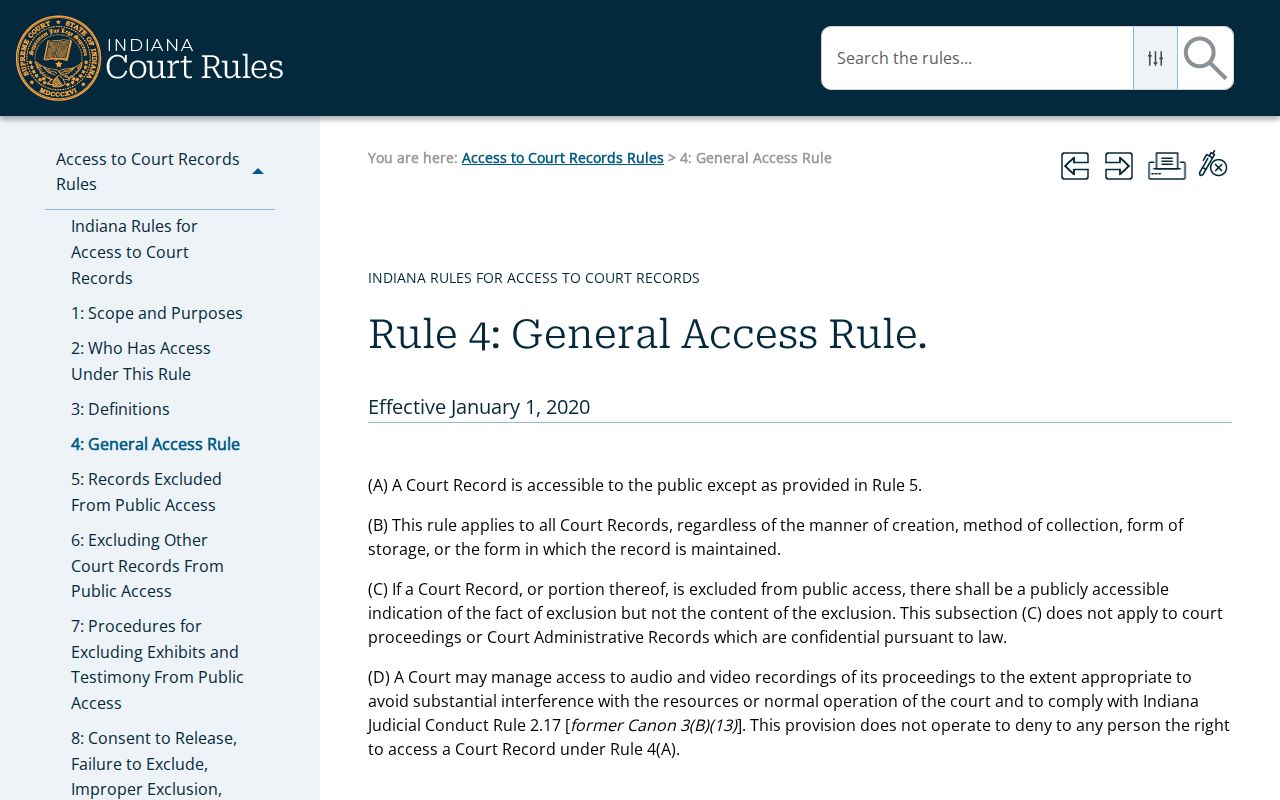
White County public access rules can leave the public view thinner than the full court file.
White County Odyssey Courts
The official Odyssey court list gives each White County court its code: White Circuit is 91C01, and White Superior is 91D01. Use the codes to narrow MyCase results when the issuing venue is unclear. Then confirm the current warrant event with the Clerk and the court that owns the case.
Request White County Court Records
Indiana court-record request instructions cover how to ask for a specific record that is not online. The White County clerk is where trial-court files start, and a tight request names the court, the case or citation number, the record type, and a date range. This route works alongside direct confirmation from the issuing court.