White County Warrant Searches
Begin at Indiana MyCase, the state's official search for public, nonconfidential court cases and documents. It is not a warrant database. A party search can surface a criminal case or a docket event without telling you whether service still stands. Under the local allocation plan, White County criminal, misdemeanor, infraction, ordinance, expungement, and post-conviction matters sit in White Superior Court. White Circuit Court handles juvenile, domestic-relations, probate, guardianship, protective-order, and related cases. Work the sequence in that order: the online source first, then the human confirmation channels White County publishes.
- Search MyCase by party name, case number, citation number, or cross-reference number.
- Filter the court to White Superior, code 91D01, or White Circuit, code 91C01, as the subject matter requires.
- Read the docket and case status, but do not infer warrant status from a blank page or an open case alone.
- Call the White County Clerk at (574) 583-7032 or White Superior Court at (574) 583-1548 to identify the case and issuing court.
- Call the White County Sheriff/Jail at (574) 583-2251 for current service or custody routing before an in-person visit.
White County Warrant MyCase
The MyCase search instructions lay out party, case, and attorney paths plus filters for court, status, and date. MyCase can expose public docket entries, charges, hearings, and financial information. There is no White County warrant-status button. It is not a complete criminal-history source either. Court rules can also keep a warrant-related record out of public view. Use MyCase for case research, then let White County officials confirm current warrant status rather than trusting the online index alone.
What a Warrant Search Asks For
MyCase rewards precision. A full name plus date of birth narrows common-name results. A case or citation number works even better. The system may show a CAPTCHA and warns against data mining, and its fields reflect a case index rather than a White County sheriff warrant list.
| Control | Type | Required | White County use |
|---|---|---|---|
| Case | Search path | No single path required | Accepts case, citation, or cross-reference number |
| Party | Search path | Name combination | Last name alone is allowed; first, middle, or birth date narrows it |
| Last name | Text | Optional by path | Exact, trailing wildcard, or sounds-like options may be used |
| Date of birth | Date/text | Optional | Helps separate people with similar names |
| Court | Filter | Optional | Use 91D01 for Superior or 91C01 for Circuit |
| Status and dates | Filters | Optional | Limit open or closed cases and filing range |
The official search-tips page explains those tabs and filters. The controls help find a White County case, but they do not certify that a warrant remains active.
White County Warrant Court Codes
The statewide Odyssey court list records White Circuit as 91C01 and White Superior as 91D01, with public-system availability shown from March 16, 2020. The codes matter. White County's allocation plan sends criminal, misdemeanor, infraction, and ordinance cases to Superior Court. So a missed criminal or traffic date usually points to 91D01 first. Remember that the Clerk serves both courts. The official Odyssey code list carries the source rows for both local courts. Matching code to court keeps two White County cases or jurisdictions from blurring together, which is an easy mistake when a name appears in both.
White County Warrant Search Results
No public White County warrant entry exists to sample, so the sheriff list cannot support claims about displayed fields. Indiana law instead describes what a written arrest warrant must contain, while MyCase may show related case data. Read the following as a guide to record entries, not a promise that every public screen shows every item.
| Person | Name or description in the judicial command, subject to access limits |
|---|---|
| Offense | Nature of the alleged offense and related charge data |
| Issue data | Date and county of issuance, plus judge or clerk signature |
| Court identifiers | Cause number, court code, filing date, and docket events when public |
| Command | Direction to arrest and bring the person before court without needless delay |
| Bail | Amount written on the warrant when applicable, subject to later judicial action |
A status word in a docket can change after service, recall, or a new order. Confirm the present state with the issuing court and the White County Sheriff/Jail.
White County Warrant Search Gaps
A no-result search can mean the spelling, date, court, or case identifier is wrong. It can also reflect a sealed record, a juvenile restriction, a temporary arrest-warrant exclusion, or material tied to an active investigation. Indiana Access to Court Records Rules 4 and 5 govern that boundary. So a blank MyCase screen proves nothing. It is not proof that White County never issued a warrant.
Quick answer: Use a blank MyCase result as a reason to verify, not as a no-warrant certificate.
Call the Clerk or issuing court for the case record and the Sheriff/Jail for service routing.
White County Warrants: Who Holds What
The White County Clerk keeps records for both trial courts. White Superior Court is the key criminal, traffic, infraction, and ordinance venue under the current allocation plan. The Sheriff/Jail is the published law-enforcement contact for service and custody routing. Monticello, Monon, Brookston, Wolcott, and other towns may initiate citations or enforcement contacts. But no separate municipal court appears in the current official Indiana directory for White County, so the county-level offices above are where the records live.
White County Clerk
110 N Main St., 2nd Floor, Monticello, IN 47960
(574) 583-7032
Monday through Friday, 8 a.m. to 4 p.m.
White County Sheriff/Jail
915 Hanawalt St., Monticello, IN 47960
(574) 583-2251
Call before traveling because no separate warrant-counter hours are published.
White County Warrant Record Requests
When the online docket is incomplete, request a specific public record from its custodian. The Indiana Access to Public Records Act, IC 5-14-3, sets the frame. Describe the White County court or agency, the record type, a case or citation number if known, and a date range with reasonable particularity. Ask to inspect or receive copies. If some material is withheld, request any separable public portion. The Indiana court-record request instructions name the county clerk as the first source for trial-court records. A narrow request can reach a docket item a broad name search missed while respecting excluded material. Timing runs on fixed clocks. An APRA acknowledgment is due within 24 hours for an in-person or telephone request and within seven calendar days for mail, fax, or email. Production itself may take a reasonable time. No inspection, search, or review charge applies, though copy fees may. White County publishes no warrant-specific certified-copy fee.
Which Warrants Stay Restricted
Indiana opens most court records under Rule 4, and Rule 5 draws the exceptions. Sealed or confidential files stay closed. So do juvenile matters, protected victim or witness details, and investigative material. Search-warrant process outside a pending criminal case may also be withheld or redacted. Rule 5 even allows a temporary exclusion tied to an arrest warrant under defined conditions. The official exclusion rule lists every category that can limit a White County warrant check. That is why a blank result is not a final answer on whether a warrant exists.
Access rule: Ask for the public or redacted portion and the legal basis for any denial.
Neither the Clerk nor MyCase can disclose material that a statute, rule, or court order closes.
Confirm Before You Act
A search that hints at a warrant in your name is only a hint. Paying a balance or showing up unprepared may not clear anything. Talk to a lawyer first. Then ask the issuing court directly whether the judge wants an appearance, a reset, a recall motion, a surrender, or bond. Call the Sheriff or Jail before any voluntary surrender, because White County posts no separate surrender hours, bond-window schedule, accepted payment methods, or identification policy. Once the judge acts, get the docket order or a public status confirmation and check the service status again. The broader White County active warrant search explanation covers why the current sheriff program page is not a complete list of outstanding warrants.
Warrants in White County: The Main Types
White County official sources stick to plain Indiana terms: arrest warrant, warrant, and failure to appear. Nothing local uses capias or capias pro fine. An arrest warrant follows judicial findings under Indiana charging and probable-cause rules. "Bench warrant" works as everyday language for an order after a missed appearance or a release violation. Just note it is not a verified White County statutory label.
| Warrant type | Common setting | First confirmation point |
|---|---|---|
| Arrest warrant | Criminal charge and probable cause | Issuing court and Sheriff/Jail |
| Bench or FTA warrant | Missed hearing or release violation | Clerk and assigned judge |
| Traffic or ordinance warrant | Missed date or unresolved court duty | White Superior Court |
| Federal warrant | Federal criminal process | Northern District of Indiana |
| Tax warrant | State tax collection | Separate Indiana tax-warrant system |
White County Warrants: Who Issues, Who Serves
Two courts split the work in White County. White Superior Court takes criminal, misdemeanor, infraction, ordinance, expungement, and post-conviction cases under the current case-allocation plan. White Circuit Court handles juvenile, domestic-relations, probate, estate, guardianship, and protective-order matters. One elected Clerk keeps records for both courts, judges issue warrants, and the Sheriff with other authorized officers handles service.
White County Government Center
110 N Main St., Monticello, IN 47960. The Clerk is on the second floor and is open Monday through Friday, 8 a.m. to 4 p.m.
White County Sheriff/Jail
915 Hanawalt St., Monticello, IN 47960; (574) 583-2251. Call before traveling because no separate warrant-counter or surrender hours are posted.
Handling a White County Warrant
Get the facts straight before you move. Confirm the exact case, the issuing court, the warrant's current state, and any bond or hold. A payment alone may not recall a warrant, and walking into the courthouse does not guarantee you avoid booking. A lawyer can ask whether the judge in White County will allow a reset, an appearance, a recall, quashing, bond modification, or a planned surrender.
- Obtain the current public docket and identify the judge's order.
- Call the Sheriff/Jail before surrendering because intake details are not published.
- Ask whether bond applies and whether the judge changed the local schedule.
- Use the court-approved form or order, then keep each receipt and release condition.
- Confirm the later docket and warrant status after court action.
Bond in White County gets you released; it does not dismiss the case, so every hearing and condition still matters.
White County Bond Rules
Local rule LR91-CR00-15 publishes default bond amounts, but a judge can deviate from them. Murder carries no bond. Felony defaults run from $75,000 at Level 1 down to $10,000 at Level 6. Misdemeanor classes sit at $5,000. Add-ons, doubled amounts, no-bond review, release conditions, and probation, parole, or existing-bond holds can all change the number, so treat these figures as the rule rather than a promise for any one White County warrant. The approved forms are corporate surety, full cash, a 10 percent cash deposit in the defendant's name on an approved form, and a real-estate property bond with prior approval. Personal-recognizance release may apply when Indiana Criminal Rule 2.6 permits it.
Confirm before posting: The sheriff bonding page publishes no counter hours, accepted payment types, provider list, identification rule, or online form.
Federal Warrants and White County
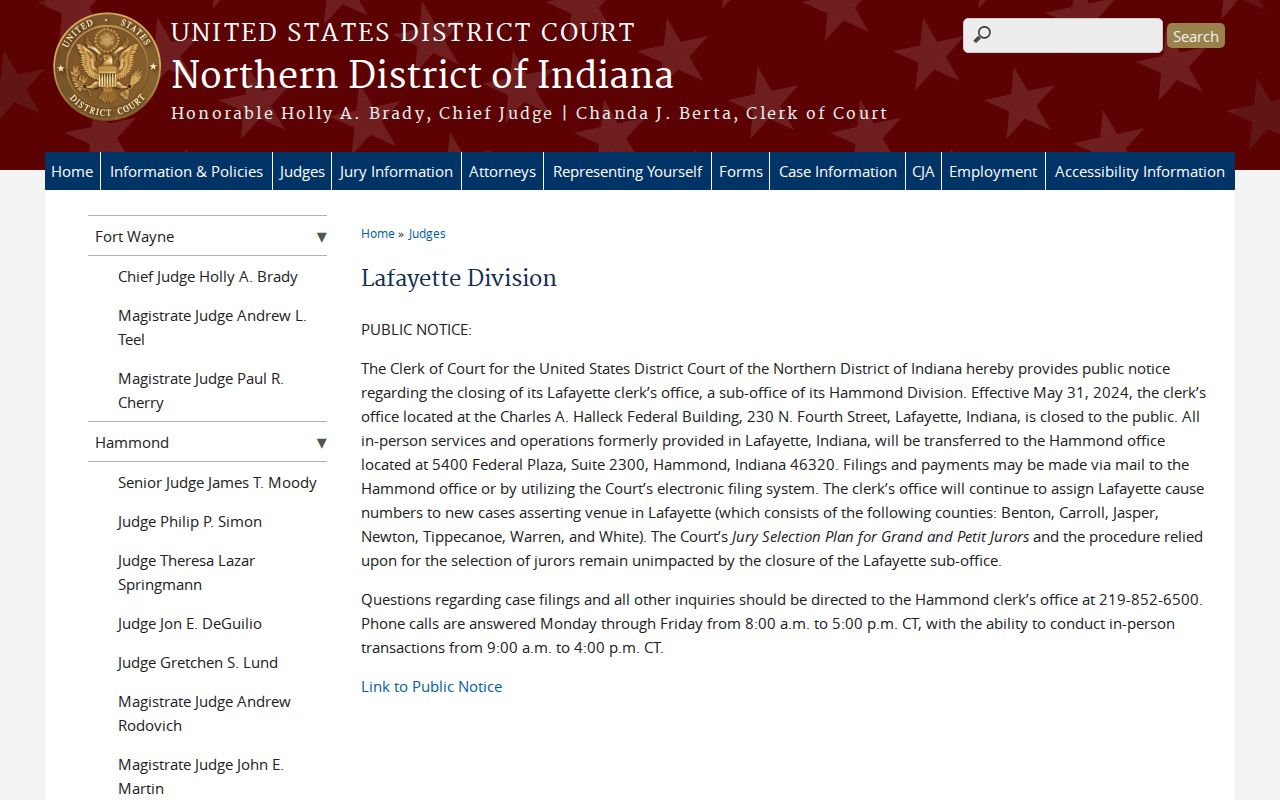
White County sits in the Northern District of Indiana's Lafayette venue. The Lafayette clerk's public office closed May 31, 2024. Official notice now routes inquiries to Hammond at (219) 852-6500. PACER and the PACER Case Locator provide federal docket information, McVCIS gives selected filed-case details by phone, and none of them is a complete public federal warrant roster. The official federal venue notice documents the closure and White County's assignment.
Warrant Record Access Under Indiana Law
Indiana's Access to Public Records Act, IC 5-14-3, guarantees inspection and copying. Requests just need reasonable particularity. Name the court or agency, the record type, the case or citation number if you know it, and a date range. Court records are generally public under Access to Court Records Rule 4. Rule 5 excludes sealed, juvenile, confidential, investigative, search-warrant, and protected information from a White County warrant records request.
Access rules: Ask for any separable public portion and the legal basis for withheld material.
Fees: APRA charges no inspection, search, or review fee for a White County warrant records request, though copy fees may apply, and the county publishes no warrant-specific certification fee.
City Warrant Records in White County
The five largest incorporated places all share the county court structure. None runs its own municipal court or city warrant roster. Local police or marshals can route a citation question, but the verified warrant path in White County runs through White Superior, the Clerk, MyCase, and the Sheriff or Jail.
Monticello Warrants
City police instructions send court-date and speeding questions to the county courthouse.
Monon Warrants
The marshal handles enforcement while town information and county court records follow distinct routes.
Brookston Warrants
The town contact form is public correspondence, not a warrant-status or surrender form.
Wolcott Warrants
A police extension helps local routing; the county court confirms warrant status.
Reynolds Warrants
The town lists general contacts but no police, court, warrant, payment, or recall portal.
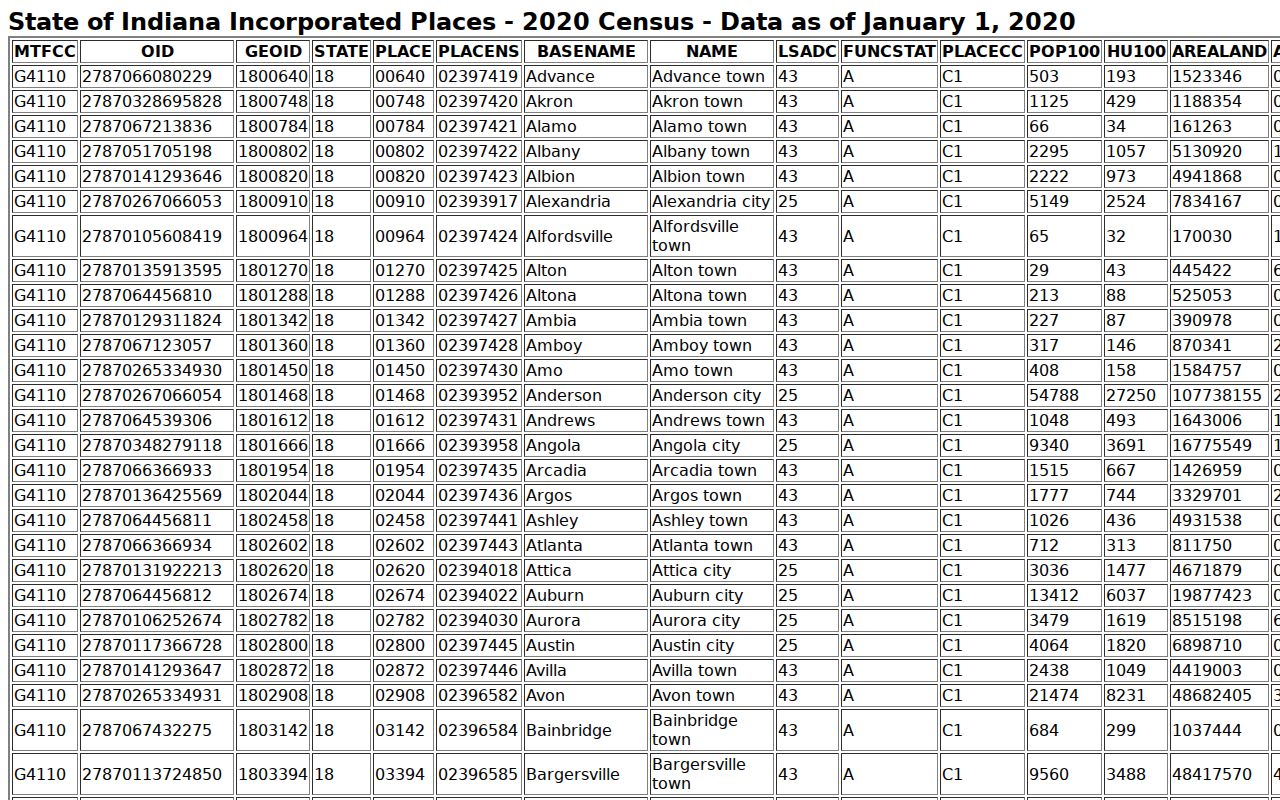
The official 2020 population table supports this order.